Covering the basics: How to start as a Dungeon Master

Published April 28, 2026 by Groupfinder Team

Overview

“Covering the basics https://groupfinder.eu/library?category=guides-how-to&search=f1=133” is a easy-to-follow set of articles helping players get through the first steps of the game. You found a game to join? Well done, but now what?
Do you have what it takes to be a DM (Dungeon Master)? Short answer: yes Long answer: You might’ve spent most of your games on the other side of the DM screen or watching people masterfully direct their games on Youtube. All this might seem like a daunting and difficult role to fill - all the rules, ruling, voices, worldbuilding and keeping track of everything that is going on. Feels a lot for one person to manage. But here is the honest truth - most DMs are mostly just “winging it” as they go. They might not know every rule in the book or have every alleyway and farmhouse carefully plotted with intricate details for the world their players roam around. You don’t have to be a master of the game to be a dungeon master. It’s just a title, it doesn’t mean they know what they are doing.

The context effect

You may have watched various expert Dungeon Masters on different streams or Youtube actual plays. And thought that this is the minimum skillset you should have to even dare to take up the role of a DM. But keep in mind, context matters. These shows do not represent your average players or DMs. These are professional productions featuring professional actors. Your players are not expecting a cinematic masterpiece with custom miniatures, terrain or orchestral soundtrack. They are your friends, either new or old. And they just want to hang out, eat snacks, tell stupid jokes and see what happens when they push too many buttons. Don’t compare yourself to others, whether they are your last DM, or someone on Youtube. Your style will be your own. And your mistakes will be part of your journey. You are there to react to their actions and tell them what happens next. That’s it. If your players end the game session feeling happy with how they spent their time, you’ve won as a DM.
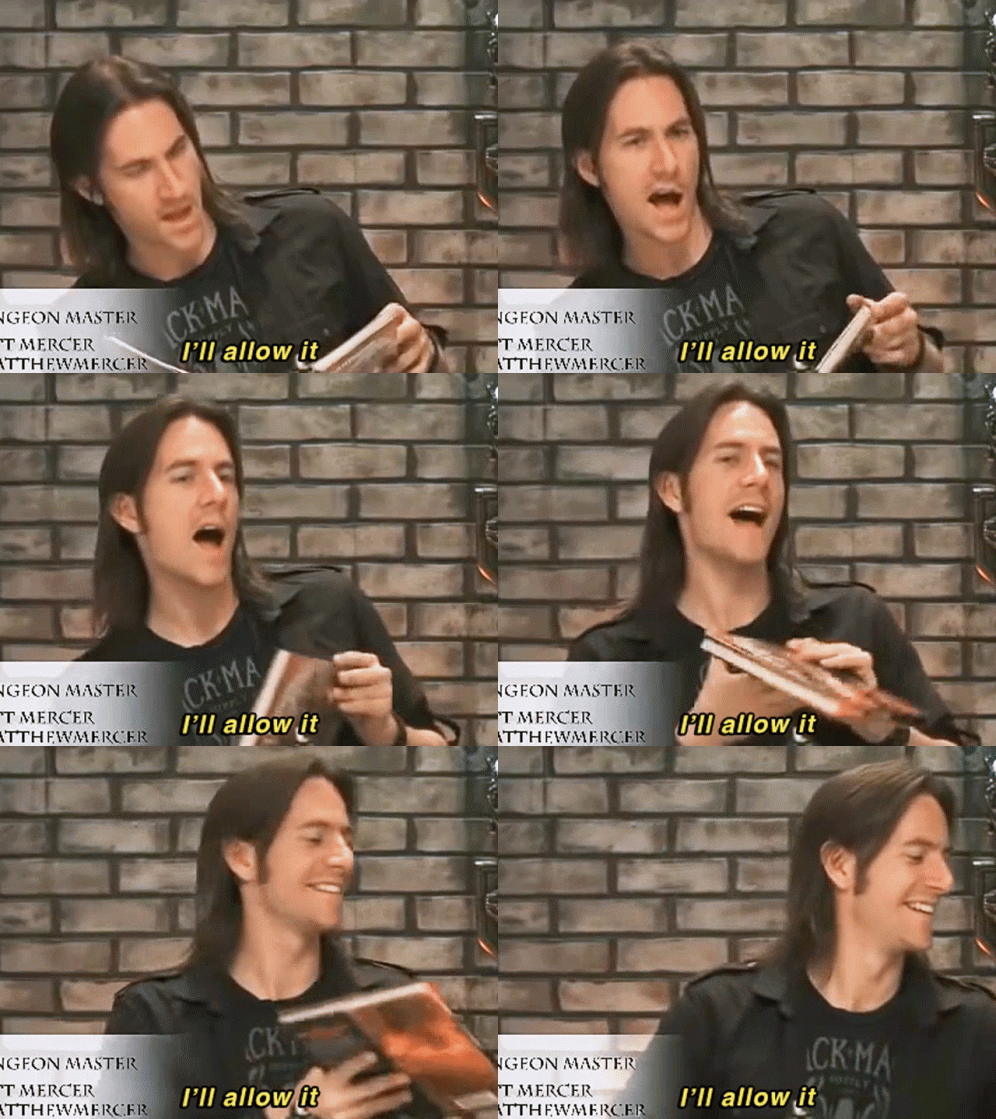
It is your game, as long as your players are enjoying it, you are winning

Start small

It is easy to fall into the pit trap of building your own epic world for the players to discover and enjoy. And while there is nothing inherently wrong with it, it would be better to start off small. You will reduce the amount of stress and headache you will endure by not preparing a 50-page lore document beforehand. Instead, consider running a oneshot. A self-contained short adventure, that starts and ends within one session. You will gather your bearings during the game, realize what parts of DMing you enjoy and what you would rather not focus too much on. Use a pre-written adventure. For D&D, you could look towards The Delian Tomb https://www.dmsguild.com/en/product/241073/the-delian-tomb or A Most Potent Brew https://www.dmsguild.com/en/product/186488/a-most-potent-brew-a-basic-rules-adventure. These include maps, monsters and all the relevant knowledge you need to run your players a game. Or grab one of the starter sets (ex. Heroes of the Borderlands https://www.dndbeyond.com/en/heroes) and run that. Make sure that you understand the whole story beforehand, so you know where the story is supposed to go. If, however, you feel like creating something of your own, you can simply build a oneshot that follows some specific rules. Entrance: A puzzle or a simple monster fight to get the players involved. Cause: A situation to tie the players’ characters to the story. A clear call to action to guide the characters towards the end-goal of the adventure. Problem: With the goal set, present your adventurers with a situation that requires them to overcome it. Whether by brute force, thinking outside the box, or something completely different. Here’s a DMing secret: You can have your players face a situation that needs solving but as a DM, you do not have to know what the right solution to that needs to be. Let your players attempt different approaches and if they come up with something that seems reasonable, take that as the solution. Final encounter: Your oneshot should be leading towards a finale. Whether it is a boss fight, or a grand puzzle or situation that requires effort and teamwork - anything goes. It should be connected to the previous blocks to establish a cohesive narrative story. The ending (optional): Once the final encounter has been resolved, you can offer your adventurers a conclusion, perhaps it is a treasure hoard, public praise or something different. Since it is a oneshot, you don’t really have to worry about consequences, as the story ends there. Keep in mind, that oneshots should be reactive. Players should be forced to react to situations and not given too much time to wander around, chat with Boblin the Goblin at the tavern, or get bogged down with planning.   A good idea would be to have some pre-made NPCs in the background, so you can pull those up at moments notice. These characters should not have intricate backstories that aren’t vital to the story itself. They may have a simple motive or goal, that can support the story at hand, but isn’t a vital piece of information, should your players completely ignore or miss encountering them. You can use a name generator (like
Fantasy Name Generators https://groupfinder.eu/library/fantasy-name-generators
) to prepare a list of various names to make it seem, like you had those characters prepared and planned ahead of time.

Pace over rules

Nothing kills the vibe of the game than having to spend ten minutes looking for the correct ruling for a situation. As a rule of thumb, it is recommended to spend up to a minute looking up the rules - and if by then you don’t have the correct answer, make a ruling on the spot. Just be transparent about it and let them know that this ruling might be wrong and is temporary, in the future this might get ruled differently. But for now, to keep the story going, you should decide on the spot. If you have a more experienced player at the table, consult them. As a DM you are already managing way more than one single player should be (you are still a player, even though you are a DM). And offloading some of those responsibilities to someone else is the right thing to do. The DM does not have to be the most knowledgeable player at the table - they are the narrative engine, not the wikipedia.
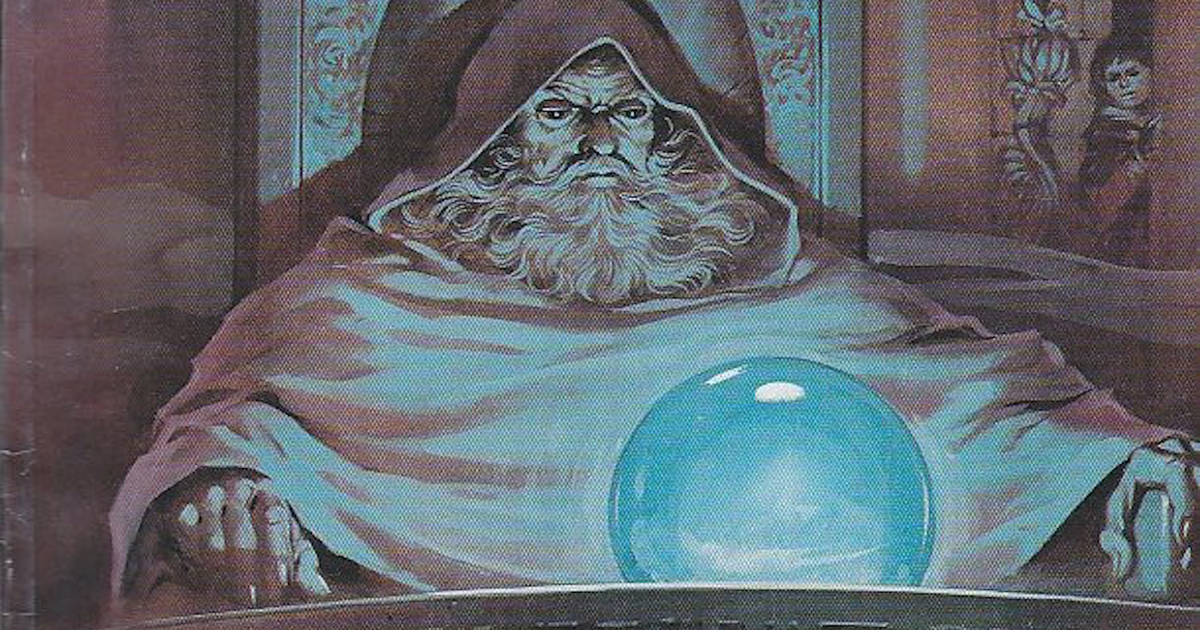
Don't spend too much time pondering the orb finding the correct ruling, keep the game going

A session zero

It is highly recommended to have a quick session zero before starting your first game. Whether it is a brief oneshot or the start of a longer campaign - leveling with your group will help you avoid misunderstandings in the future. Recommended reading: Library: Session 0 checklist: How to build a DnD group that lasts https://groupfinder.eu/library/session-0-checklist-how-to-build-a-dnd-group-that-lasts

Gather your tools

Now prepare your adventure. You will most likely spend a lot more time than you should preparing for the first session. But being somewhat overprepared will help you in the long run. Once you start understanding how DMing works, you will get better at preparing for each session, eventually cutting down on the time spent on prep.   A DM trick worth remembering and learning, is called “moving castles”. You may have prepared a location or an encounter for your players to discover or run into. But through the magic of player agency they head in the complete opposite direction to your prepared piece of content (it happens). Instead of scrapping the work you have prepared, you can simply move it, so that the adventurers still run into it. A worn-down castle filled with a tribe of goblins, waiting to ambush anyone entering the front gate? Simply move it, perhaps adjust some elements to fit the new location. Instead of goblins, they are now human mercenaries or bandits. Instead of a castle, it is a small village. This isn’t to say, that you should focus on railroading the players (although for a oneshot it would be highly recommended, that you keep your players on the track you have prepared). But re-using prepared content in a new and appropriate way is the smart play. Other than that, all you need to get started, are your dice (or digital dice, if that is more convenient for you), and some paper, to write down notes, events and questions for you to look up between sessions. Remember, you are a player too. You should be having fun, although it will feel intimidating and stressful at first, it will get better.
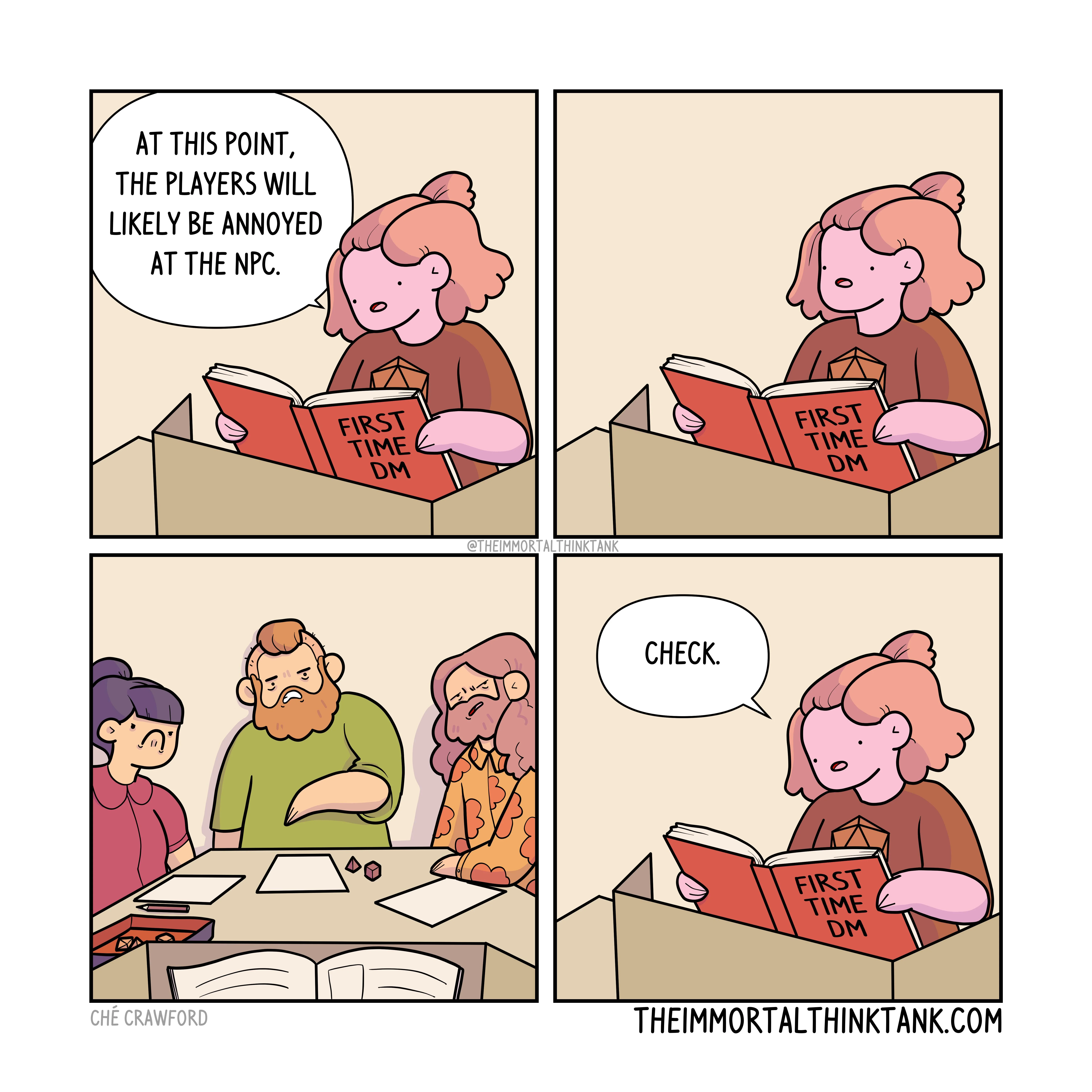
Take the leap

You are stepping into a very rewarding experience of the game. Even if you are not planning on becoming a recurring DM, you will gain a better understanding of the game and the system. This will, in turn, make you a better player. Guaranteed. If you are ready to give DMing a shot, you can start off by creating a group https://groupfinder.eu/addgroup on Groupfinder and find your players. Be sure to use the “Newbie friendly” tag to indicate the tone of the game. If you have a player in your group who has been interested in DMing, but has not had the courage to get started - “gently” send them this article, to nudge them to get started.

Other entries

That RPG Podcast
Actual Play & Podcasts

That RPG Podcast

English
Discussions
Interviews
That RPG Podcast is a podcast about tabletop roleplaying games and the art of game mastery, where we create roleplaying game adventures on the fly from prompts submitted by our listeners. We each have a story to tell. Sometimes all it takes is a single idea to kick off a great adventure. Join us as we embark on a monthly quest to bring your stories to life. That RPG Podcast is about tabletop roleplaying games and the art of game mastery, where we create roleplaying game adventures on the fly from prompts submitted by our listeners. At the heart of That RPG Podcast is Adventure Hook!, a tried-and-true method for building RPG adventures with only a kernel of an idea. Each month we take a listener prompt and help it blossom into a fully-realized adventure you can use in your games. Links thatrpgpodcast.com - Official website youtube.com - Youtube playlist spotify.com - Spotify feed podcasts.apple.com - Apple Podcasts feed patreon.com - Patreon page discord.gg - Discord server

Read more

State of tabletop - 2026
Guides & How-to

State of tabletop - 2026

What 10,000 registered users tell us about the systems people want to play Back in April we took our first analytical look at the numbers on Groupfinder. It was an overview of the active posts on the platform. Based on the games and player posts on the platform we came to the (obvious) conclusion: contrary to some niche opinions - D&D is still the king in the tabletop scene. Since then a lot of changes have happened: **Groupfinder just passed 10,000 registered users**, and 84% of them joined in 2026. Now based on all the numbers we can see on Groupfinder, we have written up a second iteration of the article. A little something we now call "State of tabletop".  All the data is based on **4,277 player profiles and 2,686 groups** from 56 countries all over the world. A bigger data set allows us to draw better and more concise conclusions. Of course one has to keep in mind, that the numbers presented here only represent what we can see within the boundaries of Groupfinder. And the lovely people using the platform to find players or games. Compared to the first time, we have split the "pathfinders" into two: 1E and 2E. Pooling those systems together was a mistake. An oversight I admit was in no way helpful to presenting the data and the tabletop scene. This time, we are hopefully showing the data in a more transparent and logical manner. The road to 10,000 The dominance of D&D Beyond just D&D Where the GMs are needed Play styles: OSR, PbtA, FitD and SWADE How people play Do groups actually fill up? The Groupfinder Library Are you contributing to the numbers? The road to 10,000 For most of 2025, Groupfinder was growing at a quiet pace. A few dozen sign-ups every month. Then November happened and users started discovering us more and more. /images/general-media/1791299708_3O0GzTlx.pngRegistered users at the end of each month Since November 2025 we've averaged about 850 new users every month, and it hasn't really shown any signs of slowing down. The summer dip (June and July) was expected and reflected in the user growth: Vacations happen, campaigns pause. But August and September have been two of our busiest months ever. When we wrote the first report in April, the platform had less than 5,000 registered users. Since then, we have exceeded that number by an increment of two. The dominance of D&D **The crown hasn't moved.** Dungeons & Dragons is still the system most people come to Groupfinder for, either as players or as GMs looking to assemble a group. **Groups**: 59% of all groups ever posted on Groupfinder are for some edition of Dungeons & Dragons. This mirrors the ~60% we saw in April. Now that our data set is larger, we feel comfortable, that the ballpark popularity sits in that range. **Players**: 73% of player profiles list D&D 5E, and 35% list the 2024 revised rules (5.5E). Players can pick several systems on their profile (on average they pick 2.7), so there is an overlap. But it also means that at least three out of four players are looking for a D&D game. **5E vs 5.5E**: The 2014 rules are still far ahead. For every group running the updated 2024 version, there are 3.6 groups running 5E. Among players the gap is narrower - roughly two 5E players for every 5.5E player. The new rules have a bigger player count than there are games to choose from. Starting out and not sure where to begin with tabletop gaming? The approach hasn't really changed: find a Dungeons & Dragons group first. There are simply more games to choose from. Beyond just D&D The encouraging part hasn't changed either: players who play D&D do move on to try other systems. Once we set Dungeons & Dragons aside, here is where the rest of the interest goes. /images/general-media/1791295582_PINPTalX.pngPathfinder 2E draws 2.6x the interest of Pathfinder 1E, which still makes the top 5 on its own. **Pathfinder, now in two parts.** Split apart, Pathfinder 2E is comfortably the most popular system after D&D: 104 groups and 663 player profiles. Pathfinder 1E is smaller, but far from retired: it still makes the top 5 on its own, and with 48 groups it has more tables than Vampire or Call of Cthulhu. Old-school crunch has a loyal following. **The new top 5.** Compared to April, Vampire: The Masquerade has overtaken Call of Cthulhu, and Daggerheart holds on to second place barely a year after release. Cyberpunk RED drops to sixth. Partly because Pathfinder 1E now takes a spot on the graph of its own. **The rising indies.** Just below the top, Lancer (mech combat with a big narrative heart) and Shadowdark (old-school dungeon crawling with modern rules) are both past 100 mentions. Keep an eye on them for the next report. Where the GMs are needed Popularity is one thing. How easy it is to actually get a seat is another. So for each system we compared how many players are interested in it with how many groups are running it. /images/general-media/1791299934_OD1gA30E.pngHow many players for every game post **The horror and grit crowd is waiting for a GM.** Call of Cthulhu, Cyberpunk RED and Vampire: The Masquerade all have 9 to 12 interested players for every group. If you have ever wanted to run one of these, you won't be short of players. Even Pathfinder 2E and Daggerheart sit above the average. If you are a player of these systems, don't wait for a group to appear: post your player profile with the system tagged, so GMs who are on the fence can see there's an audience. And if you're that GM on the fence - this is your sign. Play styles: OSR, PbtA, FitD and SWADE Some of the most interesting games out there cannot be labeled one game system. Dozens of games share the same core rules or the same philosophy, but each one gets its own name. On a system-by-system list they look tiny. Grouped together under one "family", we can get a better idea of the numbers. We sorted every system in our data into four families, using published game lists (see the sources at the end): - **OSR and NSR** (Old School Renaissance and "New School Revolution") - games that recreate or remix early D&D play: deadly, rules-light, player skill over character sheets. Shadowdark, Old-School Essentials, Mothership, Mörk Borg, Dungeon Crawl Classics, Dolmenwood, Cairn and many more. - **PbtA** (Powered by the Apocalypse) - games built on Apocalypse World's "moves" and 2d6 rolls, where every roll pushes the story forward. Monster of the Week, Masks, Dungeon World, City of Mist, Kult: Divinity Lost and others. - **FitD** (Forged in the Dark) - games built on Blades in the Dark: crews, heists, stress and clocks (progress trackers). Blades in the Dark itself, Slugblaster, A Fistful of Darkness and others. - **SWADE** (Savage Worlds Adventure Edition) - one generic engine with many official settings. Savage Worlds itself, Deadlands and Pathfinder for Savage Worlds. /images/general-media/1791298479_n23oMjiY.pngCounted as one family, OSR games have more groups than Pathfinder 2E **The old school is bigger than it looks.** No single OSR game makes our top 10 on its own. Shadowdark comes closest in 9th place. But put them together and OSR games have 114 groups, more than Pathfinder 2E's 104. Add the original pre-3rd edition D&D rules (OD&D, AD&D 1E and 2E, B/X, BECMI) and the old-school crowd grows by another 17 groups. **PbtA is the storyteller's niche.** 39 groups is modest, but every PbtA group has 6.3 interested players waiting. Every single PbtA group we could see runs online. **Forged in the Dark is the hardest seat to find.** With just 10 groups and 7.4 interested players per group, FitD is the style where players outnumber tables the most. Blades in the Dark accounts for most of it. If you have ever wanted to run a heist, the crew is already here. **Savage Worlds is steady.** 25 groups, and all of them run the core rules rather than a named setting like Deadlands. It is also one of the styles most often played around a real table (28% of its groups), together with Shadowdark. A note on counting: groups run one system each, so the group numbers are exact. Player profiles can list several systems, so a player who ticks both Shadowdark and Old-School Essentials is counted twice in the OSR family. That's why we lead with groups here. How people play **Online is the default, but the table is underserved.** 81% of groups play online, while only 65% of players are looking for an online game. Flip it around and the in-person side looks very different: 35% of players want a game at a physical table, but only 19% of groups offer one. That works out to almost 3 players for every in-person group, versus about 1.3 for every online group. If you are a GM with a spare seat at your kitchen table (or a friendly local game store), you are in demand. [Browse the players near you](https://groupfinder.gg/players) - the radius search will show who is close enough to join. **Campaigns rule.** 85% of groups are running a campaign (a longer story played over many sessions), 14% are one-shots (a single, self-contained session) and 1% run West Marches or living-world games (a shared world where players drop in and out of sessions). Daggerheart is the exception worth pointing out - 27% of its groups are one-shots, more than double D&D 5E's 11%. People are still trying it on for size. **Every system has its own table fingerprint.** Where and how people play changes a lot from system to system. /images/general-media/1791299345_BaWJDt9f.pngDaggerheart is the one-shot system, Shadowdark is the in-person one. A few things stand out. **Shadowdark** is the most in-person system we track - a third of its groups meet at a real table, and old-school dungeon crawls clearly love a physical map and a pile of dice. **Daggerheart** has the most one-shots (27% of groups): people are still test-driving it. At the other end, **Pathfinder 1E** is almost entirely online campaigns - only 4% of its groups are one-shots. When you've invested in a character that crunchy, you want to keep playing them. **Weekly is the rhythm.** 63% of groups meet every week and 15% every other week. Monthly games are rare, at just 2%. **Where everyone is from.** Half of our users are in the United States, followed by the United Kingdom (9%), Estonia (7% - hello, home crowd), Canada and Germany. In total, users with a location set come from 56 countries. Do groups actually fill up? When a GM closes their group post, we ask why. 909 GMs have answered so far, and **57% closed because their table was full.** 24% say they found their players here on Groupfinder, and another 33% filled the table elsewhere. Only 12% gave up because they couldn't find enough players. A further 13% decided they couldn't or didn't want to run the game anymore - which happens to the best of us - and the rest picked "Other". Sure, we might be a bit biased here, but one in four tables finding its whole party through us feels like a good start. We'd like that number to be a lot higher by the next report. The Groupfinder Library We still believe that showing players more than one system keeps the hobby fresh. That's why the Groupfinder Library exists. It is a growing collection of game systems, tools, creators and communities. Maybe you came here looking for a D&D game and leave curious about Lancer's mechs or Mothership's creeping dread. Your first game doesn't have to be D&D. Every system named in this article has its own library entry, so you can read up before you commit. Are you contributing to the numbers? Whether you are a GM looking for a party or a player looking for a home, your post helps us understand where the hobby is going. **Looking for a game?** Create your player profile and let GMs find you. **Looking for players?** Browse the groups looking for players or post your own table. Till next time, for another State of tabletop

Read more

Tales from the Stinky Dragon
Actual Play & Podcasts

Tales from the Stinky Dragon

English
Dungeons & Dragons
Actual Play
Tales from the Stinky Dragon is an actual-play Dungeons & Dragons comedy podcast that features four foolish friends and their (very patient) dungeon master. Join along for an auditory adventure with a fully-voiced cast of characters, immersive sound design, a catchy soundtrack, and gripping stories of exotic lands and strange creatures. Tales From The Stinky Dragon is a fun and easy award-winning podcast for all ages, and is the perfect experience for both seasoned D&D players and those just getting into the genre. Links youtube.com  - Youtube channel spotify.com  - Spotify feed patreon.com  - Patreon page stinkydragon.fandom.com  - Tales From The Stinky Dragon wiki

Read more

Looking for a group?

Find a tabletop group to join or players to invite. Groupfinder is a free looking-for-group platform. By players, for players.