If you are new to Dungeons & Dragons, getting started can be a daunting task, one of the first hurdles to overcome is to
find a dnd group  https://groupfinder.eu/lfg/dnd
. The game has over 50 years of history, rules, knowledge, changes and players. Just picking it up and getting started will seem like a lot of work. Let’s break the whole process down to simple steps you can follow.
What is D&D?
The core of the game is
collaborative storytelling. Instead of following a linear path, the game takes the players through a story. One that doesn’t generally have a set structure or end-goal.
Lets explain it through an analogy - a book. The players decide that they want to play D&D, and one of them steps up and states that they are
willing to be the Dungeon Master https://groupfinder.eu/library/covering-the-basics-how-to-start-as-a-dungeon-master. The DM is the one who will come up with the world, the setting, the locations, various events and even history for the world the game will take place in.
And the others are the players (although the DM should also be considered a player as well, but we will separate these two roles for now). The players will be the main characters of the story. Mighty heroes, accidental adventurers or incompetent bandits - as long as the story the DM will be running makes sense for those characters.
The game is a collaborative story, where the DM will present the players with various characters, situations, problems and encounters and the players will try and figure their way through all those. Either by talking their way out of them or getting into combat and resolving the situation in another way.
There is no right path to take in D&D - the DM can never anticipate what the players will do in a certain situation - and the players will have no way to know what the right approach would be. But stumbling through these situations will be the story. Whether things work out for your characters and you become heroes, or you fail at doing the most mundane tasks, leading to humiliation, failure and a lot of laughs - this makes it your story.
How is D&D?
The game has a lot of rules - this might seem daunting, but generally you will try and understand them as you start playing. If your DM (or other group members) have more experience than you, you can rely on them to help you figure things out. Nobody knows all of the rules by heart - referencing the rulebooks is a part of the game.
But how exactly is D&D played? Is there a game board? Is it a computer game?
This is what separates D&D from traditional board and video games. It is a narrative game. You will play the game through explaining what your character would do. Whether you succeed or fail, is determined by rolling dice (and applying some rules).
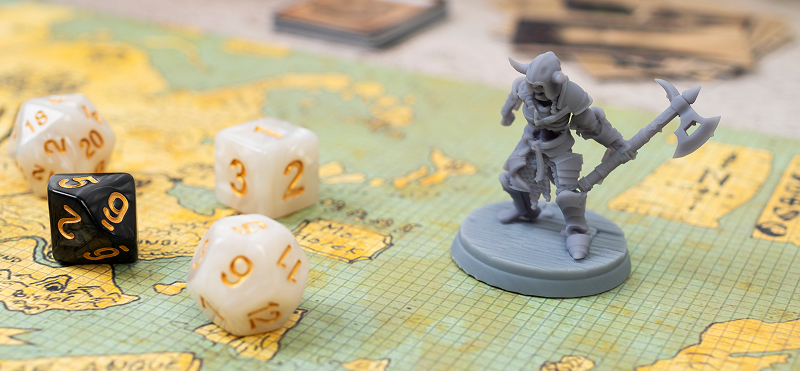
There is no board to move your figurine on. Instead the DM describes (verbally) what you are seeing, hearing, smelling and so forth. Based on all that information, you can tell the DM what your character would like to do - “I would like to find someone who looks like a guard” / “I would like to punch the first person I see in the face” / “Looking around, do I see something that looks like a dragon?” And so forth.
As a player, you are in control of your characters intentions and actions. The success of all of that is determined by the Dungeon Master and their response. If your characters have reached a dungeon and are looking for a hidden door in the room, the DM might tell you to roll Perception. Whether your character is good at that stat or not, will affect the likelihood of you succeeding.
Once again, it is a story that your character is going through. How you solve different situations is up to you. You are limited by what is realistic for your character to be able to do and what kind of an approach you come up with.
D&D is a game where there is no exact way of winning. You are not playing the game against the others - as an adventuring group, your focus should be on cooperation - to overcome various obstacles by working together, relying on others and their characters’ abilities. If you leave the game session and you had fun - that really is the only way to be “winning” at D&D.
Why is D&D?
While the article revolves around Dungeons & Dragons, almost all of it can be taken and applied to any other tabletop roleplaying system. The hobby space does not only consist of the
behemoth that is D&D https://groupfinder.eu/library/is-dnd-still-king-a-deep-dive-into-groupfinders-2026-matchmaking-data. Ever since the first edition of the game was released back in 1974, a vast number of other tabletop systems have been created by other creators. You can find various
other systems listed in the library here https://groupfinder.eu/library?category=game-systems-ttrpg.
Dungeons & Dragons is a great gateway to the hobby thanks to it's rather streamlined gameplay process, rules structure and publicly available resources and knowledge. And many of the skills and knowledge can be transferred over to other systems, even if their focus is on more mechanical systems or different themes. While you will be able to find more groups and other players for D&D, once you are more familiar with the whole TTRPG genre, you should branch out and experiment with other systems to get a better understanding of what kind of a game system you would actually prefer.
Gather your gear
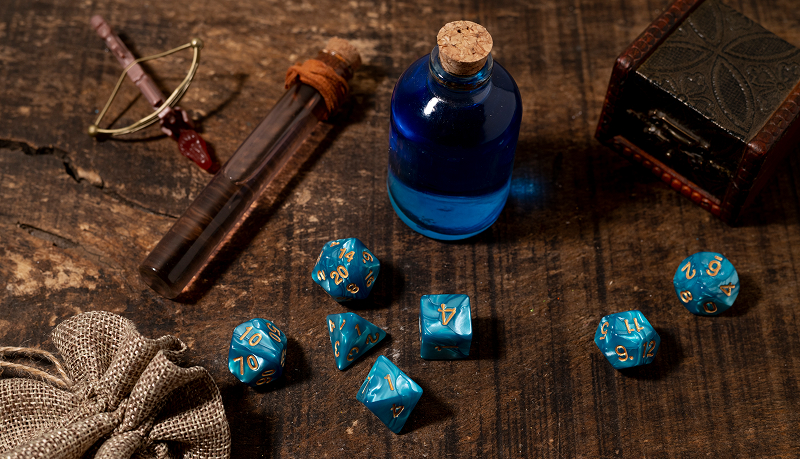
To start playing, you don’t need much. You need other players and someone willing to be the Dungeon Master. You may have seen various memes about the dice. D&D is famous for dice and dice-related obsessions and while some players get themselves a set of dice and hold onto those for their entire tabletop gaming career - there are others (commonly referred to as dice goblins) who can’t stop buying new dice. But dice are dice, at the end of the day. But you don’t even need dice - there are various digital dice rolling tools to replace the need for physical dice.
Then there are the rules. Fortunately the
free basic rules https://www.dndbeyond.com/sources/dnd/br-2024 are available online. You can familiarize yourself with the rules free of charge and get the general idea of the system. With the rules at your hand, you need to create a character.
Your character is boiled down to your character sheet - a document that holds a technical overview of what your character is. How strong they are, how smart, how charismatic, how good they are at picking a lock and many other aspects that make your character unique.
If you are just starting out, it is recommended to not spend too much on trying to remember and understand all the rules. Without context (since you haven’t played the game before) the rules are likely to not be very intuitive and understandable.
Same goes for creating a character. Sure, you might have the idea of a character floating in your mind, but it is important that your character’s concept fits the story the DM will be setting you into. Creating a silly character might not be the best fit, if the story will take place in a dystopian vampire-infested world.
Finding a group
A typical D&D party consists of 3-6 players. This is definitely not a hard limit (on either end), some game groups are two players and a DM, some are eight. Although the sweet spot of 3-6 generally might be the most enjoyable for a new player.
The best way of finding a group is forming one with your friends or family - you most likely know these people already and know whether you’d like to spend 3-5 hours at a time with them.
The second best way is Groupfinder. Sure, we might be a bit biased here, but Groupfinder is here to solve one of the biggest hurdles a newcomer might encounter when trying to start playing -
finding a group https://groupfinder.eu/list. Create your profile, introduce yourself and it is highly recommended to add the “Newbie friendly” tag to your profile. If you are looking for an in-person game or to
play online https://groupfinder.eu/library/how-to-play-dungeons-dragons-online, Groupfinder will help you find your group for both.
Read:
DnD Looking for Group: How to find your next table https://groupfinder.eu/library/dnd-looking-for-group-how-to-find-your-next-table
Creating your character
Once you have found a group of players, you will need to create a character before your first game. It is highly recommended to have a “
Session Zero https://groupfinder.eu/library/session-0-checklist-how-to-build-a-dnd-group-that-lasts” before the game actually starts. That is the session before the first session where the DM will tell you about the world, what kind of a story he is hoping to run you through and other technical details regarding the games.
Now knowing what the theme and topic of the game will be, you can finally
create a character that fits the game https://groupfinder.eu/library/covering-the-basics-making-a-character. Head over to
dndbeyond.com https://www.dndbeyond.com/ and create your character there. The whole process should be more or less intuitive. But don’t feel like you have to figure everything out on your own. Talk to your DM and other players if you feel lost at any point.
In addition to the technical aspects of your character (Their species (human, elf, halfling etc.) and their class (rogue, ranger, wizard etc.) and their stats) figure out who your character is. What makes them them. On paper they might be a human fighter - but they should have a backstory, who they were before the adventure began. What they like and dislike. Do they have hobbies, favourite dish, friends or family? The more you flesh our your character, the more real they become.
The realness of the character is one major aspect that distinguishes D&D from a traditional board game. Instead of playing as the “boot” in Monopoly, you are playing as a character with a personality, with unique quirks and thoughts - all of these will shape the way they approach different situations in the game.
Go play
Hopefully you will have a better understanding of what D&D is, how to get started and how to take your first steps into the hobby space.
You can start off by heading over to the
Groups https://groupfinder.eu/list page on Groupfinder and browsing through the various games that still need players. Or instead
post your player profile https://groupfinder.eu/userform and introduce yourself. Of course remember to be proactive. Just posting your profile might not be enough - reach out to groups that are looking for players and let them know that you are interested in joining.